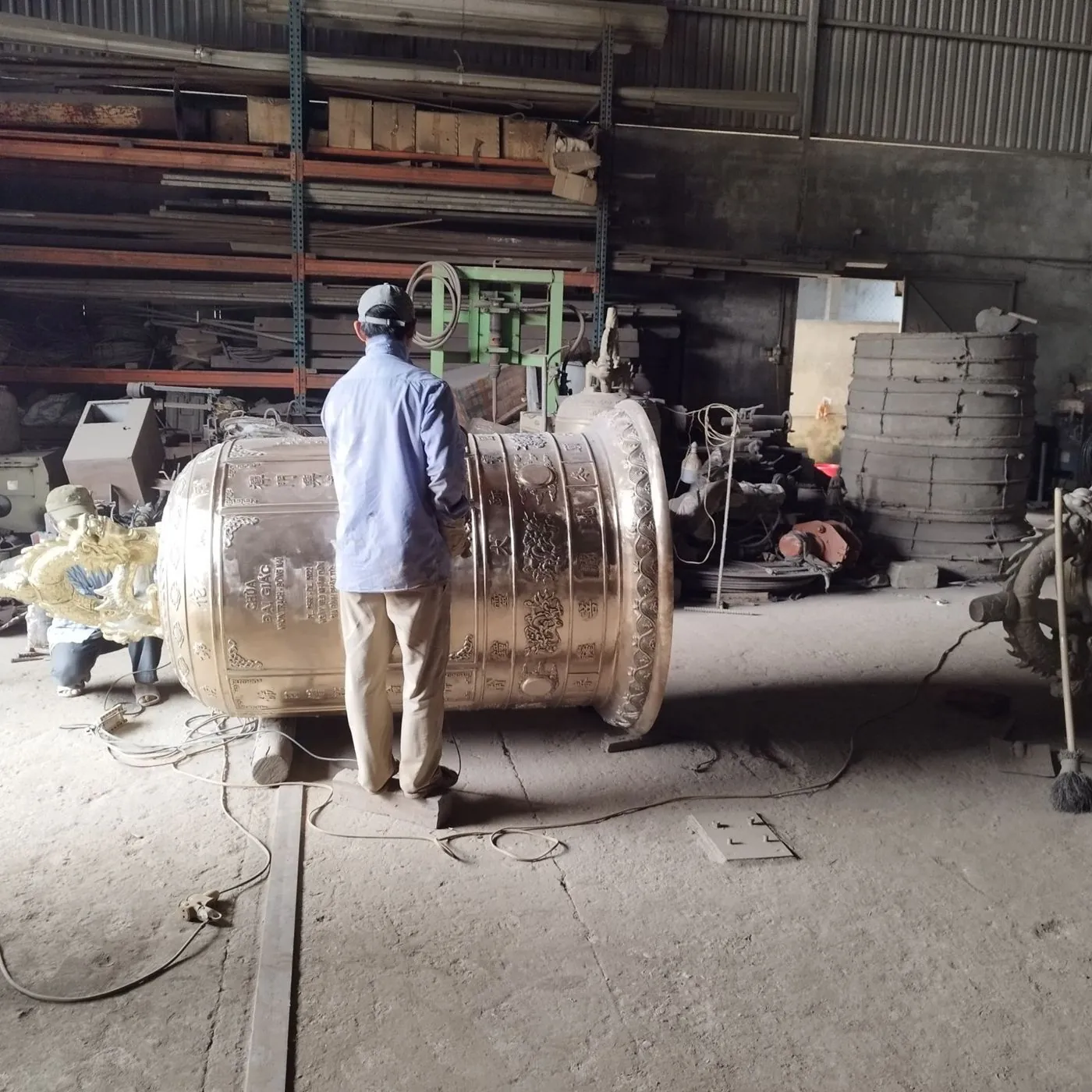
Phường Đúc means the foundry quarter. It lies on the south bank of the Perfume River, about three kilometres south-west of the centre, and its families have cast bronze since the 17th century. Under the Nguyễn emperors they made the Citadel’s Nine Sacred Cannons and the Nine Dynastic Urns that stand before the Thế Miếu temple.
I arrived at 6:30, because that is when the fire is lit. The workshop is a yard with a tin roof, a furnace dug into the ground, and moulds lined up against the wall like big clay eggs. That morning they were casting a bell for a pagoda in the countryside, and two incense burners for a family altar.
Nobody talks much during a pour. Everyone knows their job, and the bronze does not wait.
“I came home smelling of smoke and could not stop smiling.”
How a bell is made
Everything starts with clay. The mould is built in two layers, an inner core and an outer shell, from fine clay mixed with sand and rice husk, then dried in the sun and baked so it can take the heat. The decoration, dragons, lotus, characters, is carved into the clay in reverse.
The bronze, mostly copper with tin, is melted in a crucible until it glows almost white. Two men lift it with long poles and pour it in one go through a hole at the top of the mould. Then everyone waits. When it has cooled, the mould is broken open, and the piece comes out black and rough. Days of filing, chiselling and polishing make it shine.

